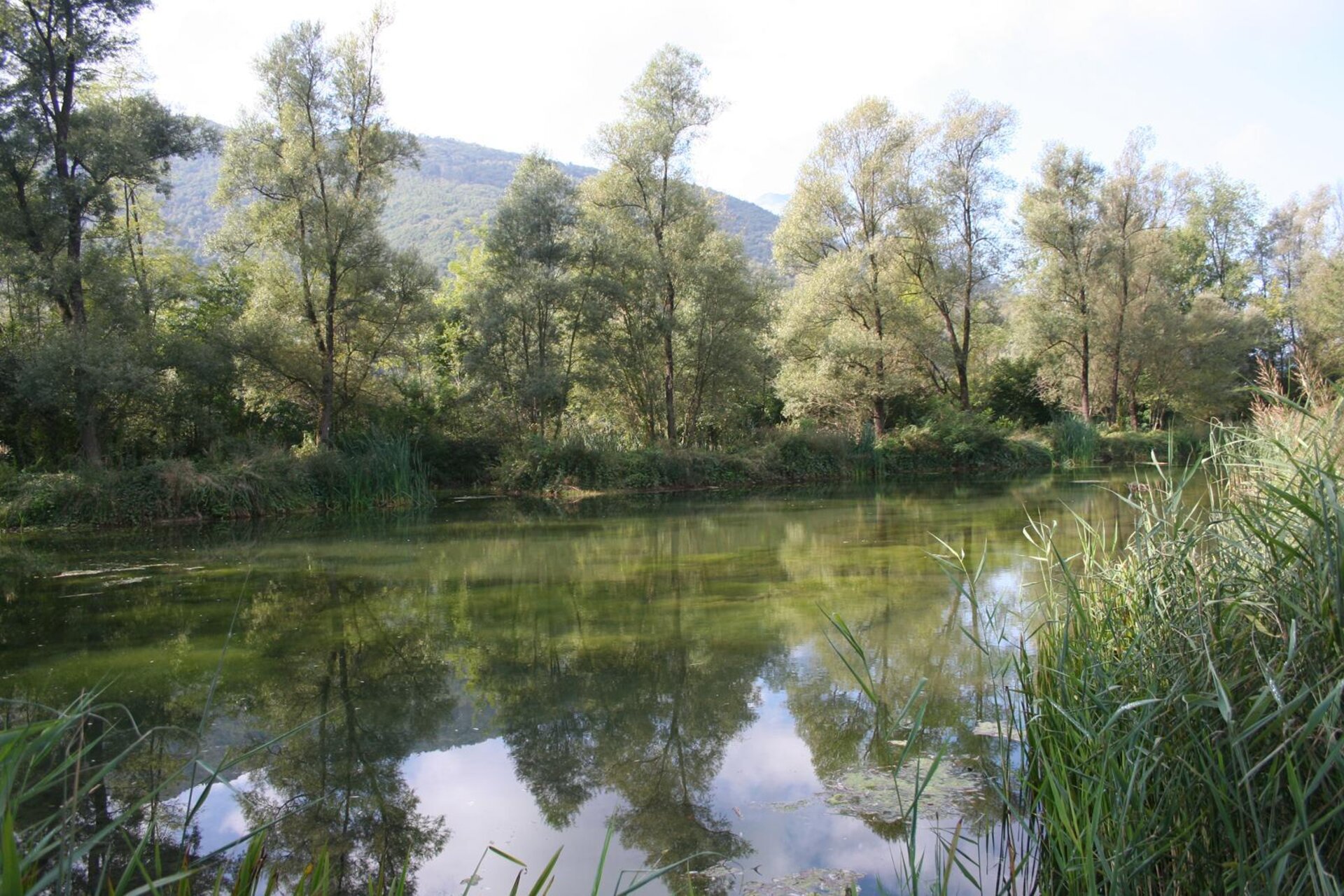
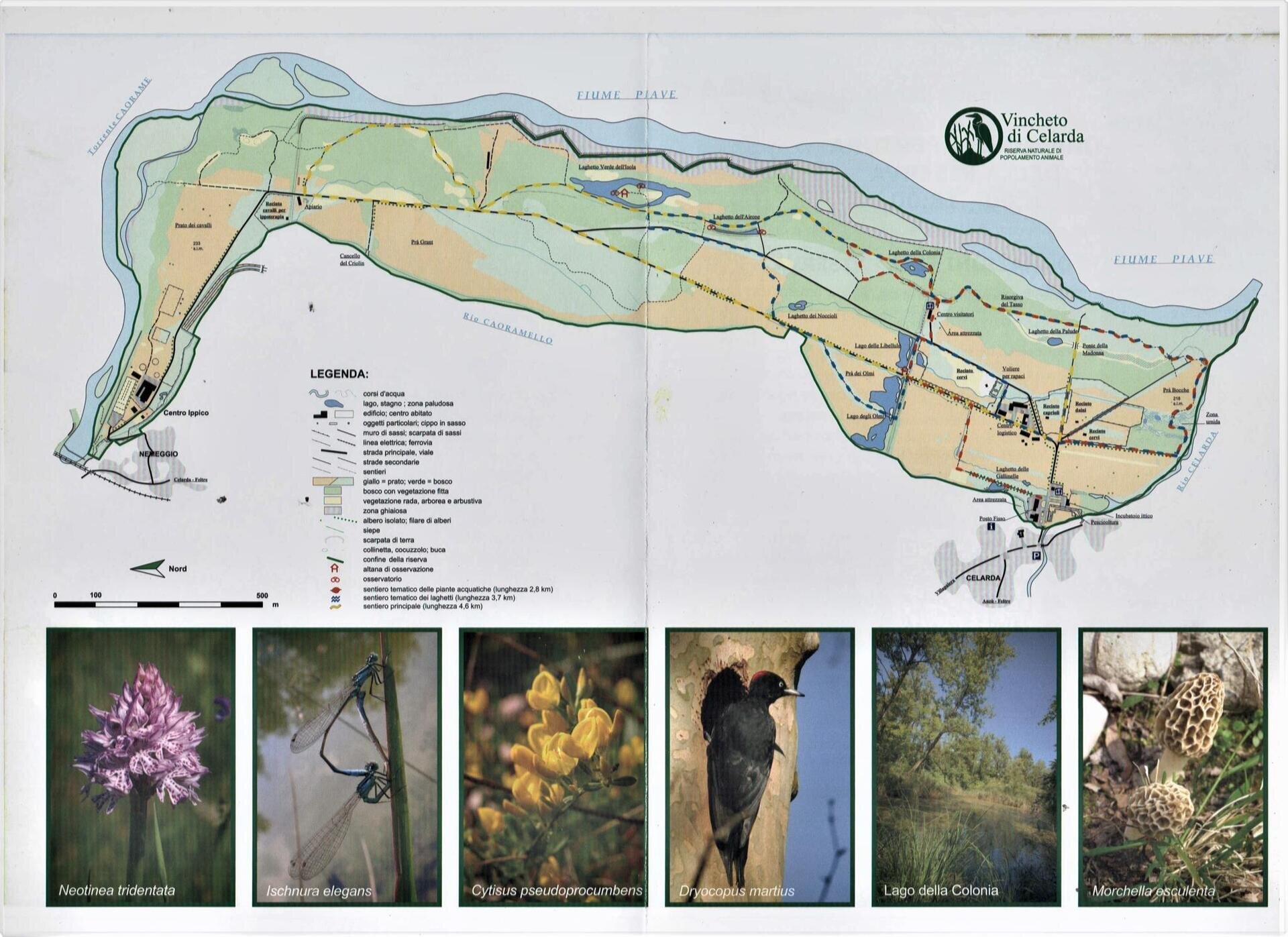
A few minutes from Feltre, heading south, the Vincheto reserve covers about 130 hectares of floodplain and is characterized by an abundance of water, which has favored the settlement of various forms of aquatic life and typical wetland birdlife.
Within the reserve, there is a facility for breeding marble trout, an indigenous species intended for the repopulation of waterways, and an equestrian center; the main interests are all activities related to the conservation and promotion of environmental culture. Supporting educational activities is a visitor center where the main environments of the reserve are recreated; there are also enclosures and aviaries where captive animals from other rescue centers are hosted or those with severe disabilities that prevent their reintroduction into nature, a beehive, and a center for horseback riding where horses used by the Carabinieri’s Forestry, Environmental and Food Safety Command for surveillance and representation services are trained.
The fauna community of Vincheto is quite rich. Eight species of amphibians have been reported, the most common and abundant being the hybrid frog of ditches. There are also the southern spotted newt, the green toad, the yellow-bellied toad, the Italian tree frog, the spotted salamander, the common toad, and the agile frog. The winter rigor that characterizes the area means that the reptile community is not very abundant: present are the striped water snake, the grass snake, the coluber, the smooth snake, the wall lizard, and the green lizard.
The avifauna is certainly the main faunal component for Vincheto, especially given its proximity to the riverine environment. 45 species nest within the reserve while another 17 breed in immediately surrounding areas. Noteworthy among these are the common merganser, the Eurasian eagle-owl, the quail, the skylark, and the little bittern. There are also some species observed quite regularly within the area (brown kite, buzzard, crested tit), or spotted more sporadically (little bittern, marsh harrier, sparrowhawk, corncrake, sedge warbler). The bird community is then completed with 30 species that are migratory or appear erratically in the area.
Regarding mammals, it is worth noting the significant population of hares, the presence of wild boars, and the populations of deer and roe deer. Environmental education activities are carried out through guided tours and research activities aimed at enhancing the state of knowledge of the reserve, for example as part of the Life Natura project.
There is appropriate signage along the roads.
Within the reserve, there are numerous flat paths.
Annual opening, path suitable for strollers and visitors with wheelchairs.
Entry prohibited for dogs and bicycles.